How to Clean Cat Urine from Carpets: Best Enzyme Cleaners
Cat urine can leave stubborn stains and unpleasant odors that ordinary household cleaners often fail to remove. Even after a carpet looks clean, lingering urine compounds may encourage your cat to return to the same spot. Fortunately, the right cleaning method can eliminate odors and protect your carpet fibers. Understanding How to Clean Cat Urine from Carpets: Best Enzyme Cleaners helps you choose suitable products and avoid common cleaning mistakes.
Enzyme cleaners are especially useful because they break down organic waste responsible for persistent urine odors. However, results depend on the product, carpet material, and how quickly you treat the accident. With the correct approach, you can restore freshness without damaging your flooring.
Why Cat Urine Is Difficult to Remove from Carpets
Cat urine contains urea, uric acid compounds, and other waste products. As urine dries, some residues remain attached to carpet fibers and the underlying padding. These residues can release unpleasant smells when exposed to moisture or humid conditions.
Ordinary cleaners may mask the odor instead of removing its source. Fragranced sprays can make a room smell better temporarily, but the underlying contamination may remain.
Dried urine presents an additional challenge because it can spread beyond the visible stain. Urine may penetrate carpet backing, padding, and even the subfloor. Therefore, effective cleaning requires treating the entire affected area rather than just its surface.
How to Clean Cat Urine from Carpets: Best Enzyme Cleaners Explained
Enzyme cleaners are designed to break down organic materials through biological or biochemical processes. Depending on the formulation, they may contain enzymes or beneficial microorganisms that help digest urine residues.


When used correctly, these products can reduce the compounds responsible for persistent odors. They are particularly helpful when ordinary detergent leaves a lingering smell.
What Makes an Enzyme Cleaner Effective?
A suitable cleaner should specifically mention cat urine on its label. Products formulated for pet urine are generally more appropriate than general-purpose household sprays.
The cleaner must also be compatible with your carpet material. Check the manufacturer’s instructions before applying it to wool, delicate fibers, or specialty rugs.
Coverage matters, too. The product must reach as deeply as the urine penetrated. Applying a small amount to the surface may leave contaminated padding untreated.
Choosing the Best Enzyme Cleaner for Cat Urine
Different products suit different cleaning situations. A fresh accident usually requires less effort than a dried stain that has penetrated the carpet backing.
| Cleaning situation | Suitable cleaner | Important consideration |
|---|---|---|
| Fresh cat urine | Pet urine enzyme cleaner | Blot excess urine first |
| Dried urine stains | Deep-penetrating enzyme cleaner | Allow sufficient contact time |
| Repeated accidents | Cat-specific odor and stain remover | Treat the entire contaminated area |
| Delicate wool carpet | Material-compatible pet cleaner | Check manufacturer guidance |
| Urine beneath carpet | Appropriate deep-treatment product or professional service | Padding may require separate treatment |
Always test the product on a hidden area first. Some formulations may affect dyes, finishes, or delicate fibers.
Step-by-Step Method for Cleaning Cat Urine from Carpets
The best results come from treating the accident promptly and following the cleaner’s directions carefully.
Blot Fresh Urine Immediately
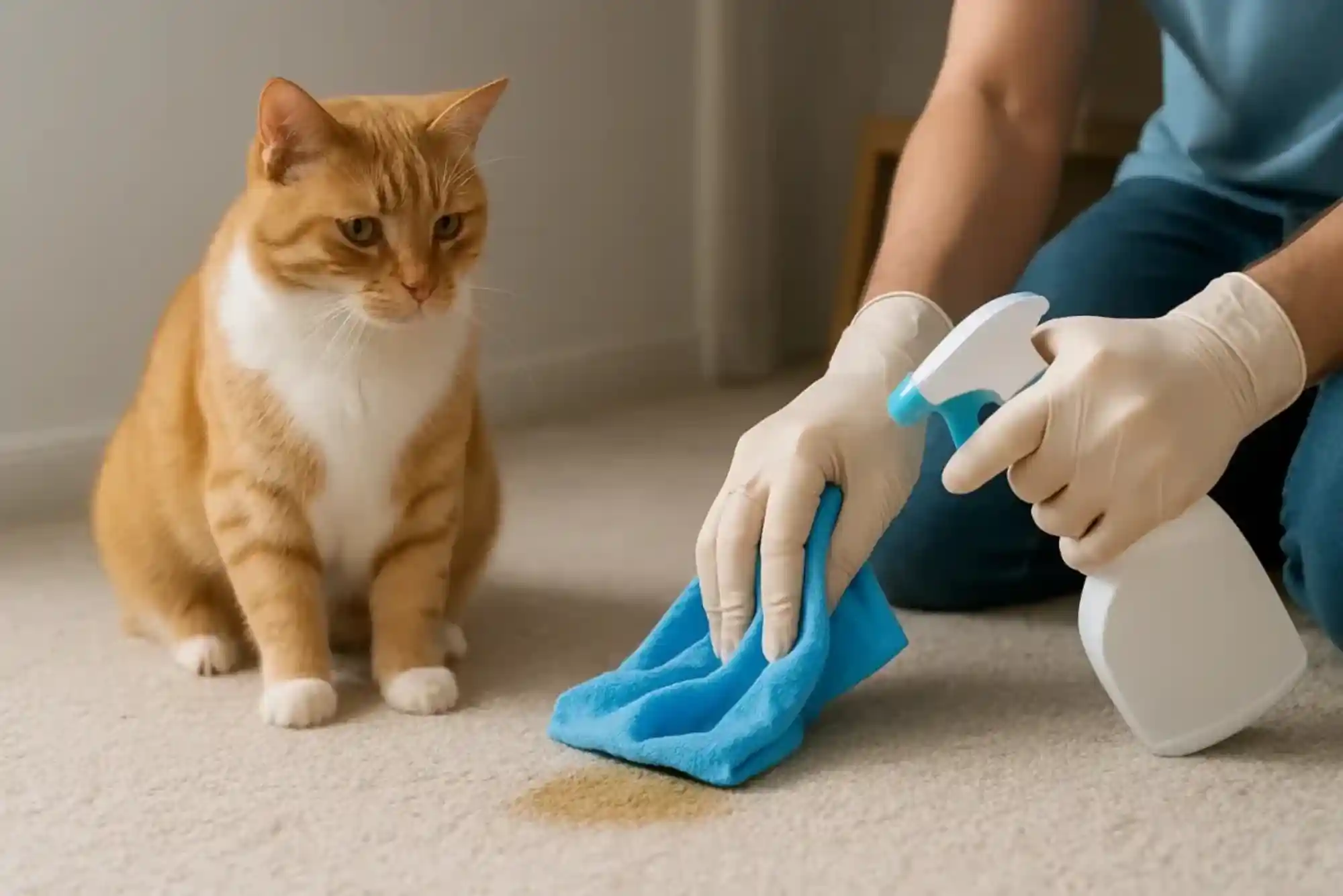
Use clean paper towels or an absorbent white cloth to remove as much urine as possible. Press gently against the affected area without rubbing.
Rubbing can push urine deeper into the fibers and spread contamination. Continue blotting with fresh towels until little additional moisture transfers.
If the urine has already dried, identify the affected area before applying the cleaner. A UV flashlight designed for detecting pet stains may help locate some hidden spots, although results are not always reliable.
Apply the Enzyme Cleaner Generously
Follow the product label to determine how much cleaner to apply. The treatment should reach the full depth of the urine contamination.
For a fresh surface stain, this may require less product than an older accident. However, if urine has soaked into the padding, surface spraying alone may not be enough.
Avoid mixing the enzyme cleaner with other cleaning products. Bleach, disinfectants, or incompatible chemicals can interfere with the treatment and may create hazardous reactions.
Allow the Cleaner to Work
Enzyme cleaners need sufficient contact time to break down urine residues. Some products work within minutes, while others require several hours.
Follow the manufacturer’s recommended treatment period. Do not immediately rinse the product away unless the instructions specifically require it.
Some cleaners also need to remain damp during treatment. If the label recommends this, prevent the area from drying prematurely using the specified method.
Remove Excess Moisture and Let the Carpet Dry
After the treatment period, follow the product’s instructions for blotting, rinsing, or extraction. Not every enzyme cleaner requires the same finishing process.
Use clean towels to absorb excess moisture. A wet vacuum may help when the carpet and product instructions permit it.
Allow the area to dry completely with good ventilation. Keep pets away until the carpet is dry and the product is safe for them to contact.
Repeat Treatment if the Smell Remains
Persistent odor does not always mean the cleaner has failed. Urine may have reached the padding or subfloor, where a surface treatment cannot fully reach it.
Repeat the treatment according to the label if necessary. If the smell continues after proper cleaning, consider professional carpet treatment or inspection of the underlying padding.
Common Mistakes to Avoid When Removing Cat Urine
Using the wrong cleaning method can make a difficult stain harder to manage. Avoid applying steam or high heat before removing the urine residues, as heat may set some stains and odors.
Do not use ammonia-based cleaners. Their smell may resemble components associated with urine and can encourage some cats to revisit the area.
Avoid scrubbing aggressively because it can damage carpet fibers. Excessive water can also spread urine into the backing or subfloor and prolong drying.
Never mix cleaning chemicals. In particular, mixing bleach with ammonia or acidic products can release dangerous gases.
Instead, use one compatible product at a time and follow its instructions carefully.
How to Prevent Cat Urine Accidents on Carpets
Cleaning removes existing contamination, but preventing repeat accidents is equally important. Start by keeping the litter box clean and accessible.
Scoop waste regularly and provide enough litter boxes for the cats in your household. A common guideline is one box per cat, plus one additional box.
For further guidance, explore Litter Box Fixes as a topic when investigating litter box habits and possible causes of inappropriate urination.
Place litter boxes in quiet, accessible locations. Avoid sudden litter changes, crowded locations, or areas where another pet can block access.
If your cat repeatedly urinates outside the litter box, arrange a veterinary examination. Urinary tract problems, bladder inflammation, kidney disease, and other conditions can contribute to changes in urination.
Seek prompt veterinary attention if your cat strains to urinate, repeatedly visits the litter box without producing urine, or appears distressed. Inability to urinate is a medical emergency, particularly in male cats.
Understanding Uric Acid Residues and Persistent Odors
Cat urine odors can persist because dried deposits remain inside carpet fibers and padding. Although uric acid compounds contribute to persistent urine residue, cat urine is chemically complex.
Some cleaning products use specialized formulations intended to help break down these residues. Search for products designed for pet urine rather than relying on fragrance alone.
The phrase Uric Acid Crystal Breakdown describes an important cleaning goal: addressing persistent residue rather than simply covering the smell. However, no cleaner should be assumed to dissolve every deposit under all conditions.
Product performance depends on the formulation, treatment time, contamination depth, and carpet material. Follow the manufacturer’s directions and seek professional assistance when contamination extends beneath the carpet.
Frequently Asked Questions
How to Clean Cat Urine from Carpets: Best Enzyme Cleaners for Stubborn Odors
What is the best cleaner for cat urine on carpets?
A pet-specific enzyme cleaner labeled for cat urine is a good starting point. Choose one that suits your carpet material and can reach the depth of the contamination. Follow the label and test the product on a hidden area before full application.
Do enzyme cleaners really remove cat urine smell?
Yes, suitable enzyme cleaners can significantly reduce urine odors by breaking down organic residues. However, results depend on the product and how deeply urine has penetrated. Severe contamination may require repeated treatment or professional cleaning.
How long should an enzyme cleaner sit on cat urine?
The correct contact time varies by product. Some formulas need only a short period, while others require several hours. Read the label carefully and avoid rinsing the cleaner away too early.
How do you remove old cat urine stains from carpet?
Locate the entire affected area and apply a compatible pet urine cleaner according to its instructions. Allow the required contact time and repeat if necessary. If urine has soaked into the padding or subfloor, professional treatment may be needed.
Does vinegar remove cat urine from carpets?
Vinegar may help reduce some odors, but it does not reliably remove all urine residues. A cat-specific enzyme cleaner is generally a better choice for persistent contamination. Avoid combining vinegar with other cleaning chemicals.
Why does my carpet still smell like cat urine after cleaning?
The urine may have reached the carpet backing, padding, or subfloor. The cleaner may also have been applied in insufficient quantity or removed too early. Reassess the affected area and consider professional cleaning if the odor persists.
lookme.ae is an online platform designed to help users discover services, businesses, and useful resources in the UAE. Whether you are searching for local businesses, exploring available services, or looking for convenient solutions, lookme.ae can help simplify your search. Explore the platform to find relevant information, connect with service providers, and discover opportunities that meet your personal or business needs.
Conclusion
Knowing How to Clean Cat Urine from Carpets: Best Enzyme Cleaners can help you remove stubborn odors while protecting your flooring. Blot fresh urine quickly, select a suitable pet-specific cleaner, and allow enough contact time for effective treatment.
Remember that surface cleaning may not resolve contamination beneath the carpet. Repeated accidents also deserve attention because they can indicate litter box problems or an underlying medical condition.
Choose a carpet-compatible enzyme cleaner, follow the product instructions, and treat affected areas thoroughly. If the smell continues, consult a professional carpet cleaner and consider a veterinary examination when your cat’s urination habits change. Taking these steps helps maintain a fresher home and a healthier environment for your cat.