How to Safely Trim Cat Claws at Home Without Stress
Learning how to safely trim cat claws at home without stress can make grooming easier for you and your feline companion. Although cats naturally maintain their claws through scratching, occasional trimming helps prevent overgrowth, discomfort, and accidental scratches. However, many cats dislike having their paws handled. Therefore, patience and a gentle approach are essential for a successful grooming session.
The good news is that you do not need to force your cat or finish every claw in one sitting. With suitable tools, positive reinforcement, and careful handling, you can make nail trimming a comfortable routine. Understanding your cat’s body language also helps prevent fear and resistance.
Why Is It Important to Trim Your Cat’s Claws?
Regular claw maintenance supports your cat’s comfort, mobility, and overall well-being. Indoor cats often have fewer opportunities to wear down their claws naturally. Consequently, their nails may become excessively long and sharp.
Overgrown claws can curl toward the paw pads, causing pain or even penetrating the skin. Long nails may also snag on carpets, blankets, and furniture. In older cats, reduced activity can make natural claw wear less effective.
Trimming the sharp tips helps reduce accidental scratches during play. It can also protect household furnishings without preventing your cat from expressing natural scratching behavior.
However, not every cat needs trimming at the same frequency. Outdoor cats may naturally wear down their claws more effectively. Indoor cats and senior felines often need more regular checks.


How to Safely Trim Cat Claws at Home Without Stress
The most important part of learning how to safely trim cat claws at home without stress is creating a calm environment. Your cat should feel secure rather than restrained or threatened.
Choose the Right Time and Place
Choose a quiet room with minimal distractions. Avoid trimming your cat’s nails when visitors arrive, loud noises occur, or other pets are playing nearby.
Pick a moment when your cat is relaxed, perhaps after eating or enjoying a gentle play session. Keep the room comfortable and allow your cat to approach you voluntarily.
A familiar blanket or soft towel can provide additional comfort. Place your supplies within reach before beginning so you do not need to leave midway.
Use Cat-Specific Nail Clippers
Proper equipment makes trimming safer and more precise. Cat nail clippers are designed for small claws and provide better control than ordinary household scissors.
Choose a comfortable pair with sharp, clean blades. Quick Avoidance in FelinesBlunt clippers can crush the nail instead of cutting it cleanly.
Keep styptic powder nearby in case you accidentally cut the quick. This is the sensitive area containing blood vessels and nerves. If bleeding occurs, apply gentle pressure and use the powder according to its instructions.
Grooming item | Purpose |
|---|---|
Cat nail clippers | Cut the sharp nail tips precisely |
Soft towel | Provide comfort and gentle support |
Small treats | Reward calm behavior |
Styptic powder | Help control minor nail bleeding |
Good lighting | Make the quick easier to identify |
Help Your Cat Become Comfortable With Paw Handling
Before attempting a trim, gradually introduce your cat to having its paws touched. Begin by gently stroking the shoulders and legs before moving toward the paws.
When your cat remains relaxed, briefly touch one paw and offer a treat. Repeat this process during short sessions over several days.
Next, gently press a toe pad to extend one claw. Reward your cat immediately if it remains calm.
Do not squeeze the paw or hold your cat tightly. If your cat pulls away, allow a break. Consistent, positive experiences can gradually build trust.
Identify the Quick Before Cutting
Understanding claw anatomy is essential for safe trimming. Most cat claws contain a pink area called the quick, which supplies blood and sensation.
In light-colored claws, the quick is usually visible through the nail. The hard, transparent tip extends beyond this sensitive area.
Trim only the sharp, curved tip. Keep your clippers away from the pink portion to avoid pain and bleeding.
Dark claws can make the quick difficult to see. In these cases, remove only a tiny amount at a time. If you cannot confidently identify a safe cutting point, ask a veterinarian or professional groomer for assistance.
Trim One Claw at a Time
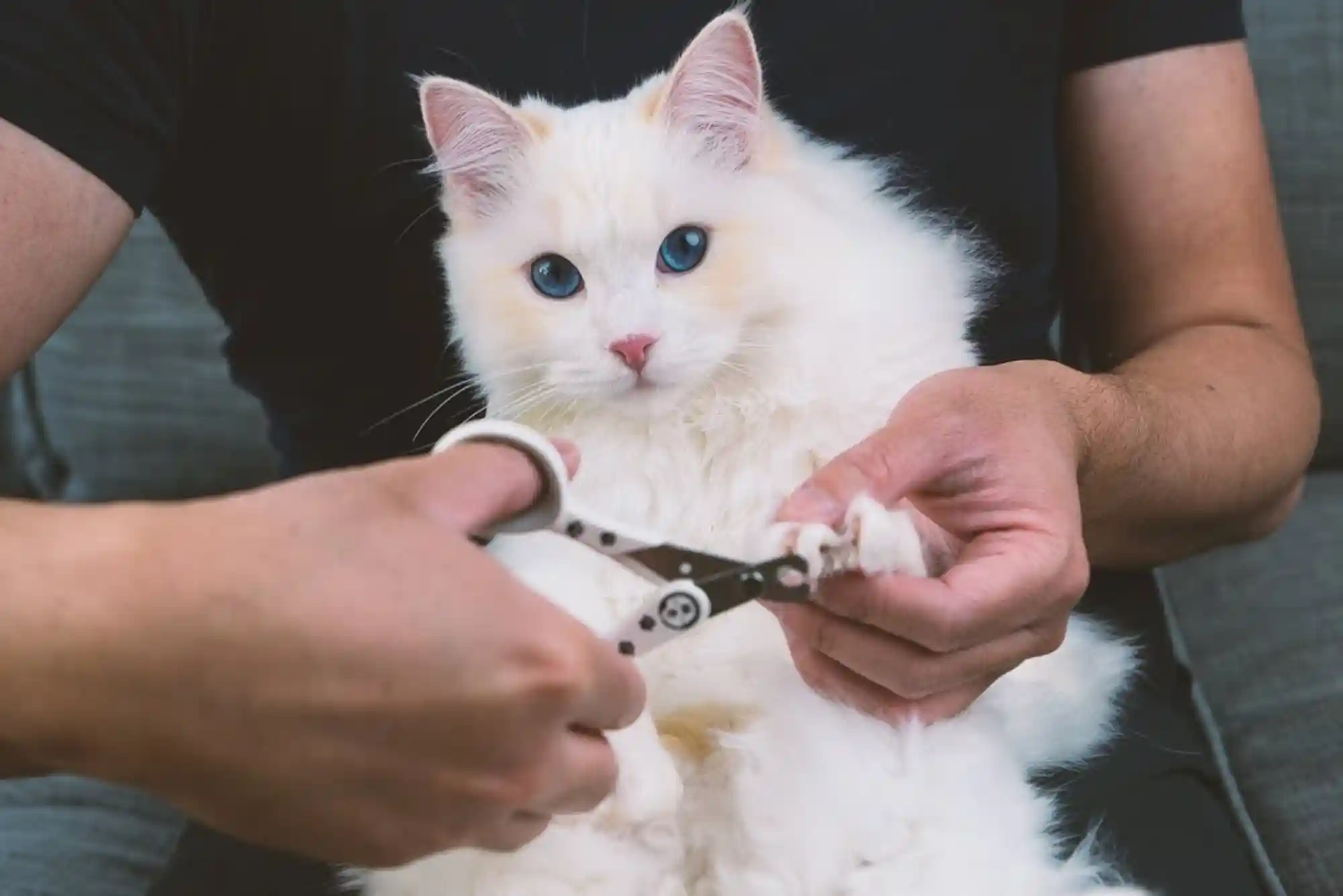
Hold your cat comfortably on your lap or place it on a stable, non-slip surface. Support the paw gently without twisting the leg.
Press the toe pad lightly until the claw extends. Position the clippers across the sharp tip and make a small, controlled cut.
Check the nail after each cut. Stop when the sharp point has been removed, rather than trying to shorten the claw as much as possible.
If your cat becomes restless, finish the current safe step and take a break. You can trim the remaining claws later. Completing a few claws calmly is better than forcing a stressful session.
How Can You Keep Your Cat Calm During Nail Trimming?
Cats communicate discomfort through body language. Learning these signals helps you decide when to continue and when to stop.
Watch for flattened ears, a rapidly moving tail, tense muscles, dilated pupils, growling, or repeated attempts to escape. These signs can indicate increasing stress.
If your cat shows these behaviors, pause the session. Give it space and allow it to settle before trying again another day.
Never punish your cat for resisting. Shouting, pinning it down, or forcibly restraining it can make future grooming more difficult.
Instead, use a gentle voice and reward cooperation. Some cats prefer sitting beside their owners, while others feel safer resting on a familiar blanket.
You can also use a gradual approach. On one day, introduce the clippers. On another, practice touching the paws. Later, trim one or two claws before ending the session.
These small steps help your cat associate nail care with predictable, positive experiences.
How Often Should You Trim a Cat’s Claws?
The ideal trimming schedule depends on your cat’s age, activity level, and lifestyle. Many indoor cats benefit from a nail check every one to two weeks, although individual needs vary.
Kittens may need gentle handling practice early in life. This helps them become familiar with grooming before their claws become difficult to manage.
Senior cats require particular attention because their activity levels may decline. Their claws can become thicker and overgrown, increasing the risk of curling into the paw pads.
Outdoor cats may maintain their claws more naturally, but regular inspections remain important. Their nails should not be ignored simply because they climb trees or scratch outdoor surfaces.
Check the front paws carefully because their claws often need more frequent attention. Also inspect the dewclaws, which sit higher on the inner side of the front legs. These claws may not contact scratching surfaces enough to wear down naturally.
Your veterinarian can recommend a suitable schedule based on your cat’s individual needs.
Common Mistakes to Avoid When Trimming Cat Claws
Even careful owners can make mistakes when learning how to safely trim cat claws at home without stress. Fortunately, most problems can be prevented with preparation and patience.
Cutting Too Much Nail at Once
Removing too much nail increases the risk of cutting the quick. Make small cuts and examine each claw before proceeding.
Forcing an Unwilling Cat to Continue
Physical resistance often increases fear and creates negative associations with grooming. Stop when your cat becomes distressed and resume later.
Using the Wrong Equipment
Human nail clippers may not provide suitable control for every cat. Use clean, sharp clippers designed for feline claws.
Forgetting the Dewclaws
Dewclaws can become overgrown because they do not touch the ground regularly. Check them during every nail inspection.
Ignoring Signs of Pain
Sudden resistance, limping, swelling, or sensitivity may indicate an injury or another medical problem. Do not assume your cat is simply being difficult.
If you notice persistent pain, damaged nails, or claws embedded in the paw pads, contact your veterinarian. Professional assistance is safer than attempting to correct a painful problem yourself.
When Should You Ask a Professional for Help?
Home trimming is not suitable for every cat or every situation. Some cats become extremely frightened when their paws are handled. Others have damaged claws, painful joints, or medical conditions that complicate grooming.
A veterinarian or experienced feline groomer can demonstrate safe handling techniques. They can also assess overgrown claws and recommend an appropriate treatment plan.
If your cat repeatedly struggles, bites, or becomes aggressive during trimming, do not continue through force. Professional guidance can help you establish a safer routine.
Sedation should never be attempted at home without veterinary direction. If medication is necessary for severe grooming anxiety, your veterinarian can discuss appropriate options.
For additional coat and nail maintenance advice, explore general Cat Grooming Tips as part of a consistent home-care routine. Understanding feline behavior and recognizing signs of discomfort can also help you avoid unnecessary stress during grooming.
Frequently Asked Questions
How to Safely Trim Cat Claws at Home Without Stress: Common Questions
How can I cut my cat’s nails if my cat hates it?
Start by helping your cat become comfortable with paw handling. Touch one paw briefly, offer a treat, and stop before your cat becomes upset.
Gradually introduce the clippers and trim only one or two claws per session. If your cat experiences severe distress, seek professional assistance.
Is it painful for cats when you trim their nails?
Trimming the sharp tip of a healthy claw should not hurt. However, cutting the quick can cause pain and bleeding.
Use good lighting and remove only a small portion of the tip. If you are unsure where to cut, ask a veterinary professional to demonstrate the technique.
Can I use human nail clippers on my cat?
Cat-specific nail clippers are generally preferable because they provide better control over small claws. Human clippers may be awkward to position and can crush some nails.
Choose equipment designed for cats and keep it clean and sharp.
How short should I cut my cat’s claws?
Trim only the sharp, curved tip without cutting into the quick. The goal is to reduce sharpness, not make the claws extremely short.
For dark claws, remove tiny amounts and inspect the cut surface frequently.
What should I do if I accidentally cut the quick?
Remain calm and apply gentle pressure with clean gauze. Styptic powder can help control minor bleeding when used according to its instructions.
Contact your veterinarian if bleeding does not stop, the nail is badly damaged, or your cat appears to be in significant pain.
Do indoor cats need their claws trimmed?
Yes, many indoor cats benefit from regular nail checks and occasional trimming. Indoor environments may not provide enough natural wear to prevent overgrown claws.
Scratching posts are useful, but they do not always eliminate the need for nail maintenance.
lookme.ae is an online platform designed to help users discover services, businesses, and useful resources in the UAE. Whether you are searching for local businesses, exploring available services, or looking for convenient solutions, lookme.ae can help simplify your search. Explore the platform to find relevant information, connect with service providers, and discover opportunities that meet your personal or business needs.
Conclusion
Learning how to safely trim cat claws at home without stress is easier when you prioritize patience, preparation, and your cat’s comfort. Use suitable clippers, identify the quick, trim only the sharp tips, and reward calm behavior throughout the process.
Remember that you do not need to trim every claw in one session. Short, positive experiences can help your cat gradually accept routine nail care.
Start by gently handling your cat’s paws today, even if you do not plan to trim them immediately. If you encounter pain, severe anxiety, or difficulty identifying the quick, consult your veterinarian for guidance. A calm approach helps protect your cat’s paws while strengthening the trust you share.