How to Bottle-Feed Orphaned Newborn Kittens (KMR Schedule)
Learning how to bottle-feed orphaned newborn kittens (KMR schedule) can help save tiny lives. Newborn kittens depend on proper nutrition, warmth, and frequent feeding. Without their mother, they need careful attention throughout the day and night.
Kitten Milk Replacer (KMR) provides essential nutrients for kittens that cannot nurse. However, successful feeding requires more than choosing the right formula. Caregivers must understand feeding intervals, safe bottle techniques, body temperature, and weight monitoring.
This guide explains how to bottle-feed orphaned newborn kittens (KMR schedule) with practical, age-appropriate guidance. It also covers common mistakes, warning signs, and ways to support healthy development.
Why Do Orphaned Newborn Kittens Need KMR?
Mother’s milk provides nutrition, energy, and important immune support. When a mother is absent or cannot nurse, a commercial kitten milk replacer offers an appropriate alternative.
KMR is formulated to meet the nutritional needs of growing kittens. It differs from cow’s milk, which can cause digestive upset and does not provide balanced kitten nutrition.
Choose a reputable commercial formula specifically designed for kittens. Follow the manufacturer’s preparation instructions carefully. If possible, ask a veterinarian to assess the kittens and recommend an appropriate feeding plan.


Newborn kittens are especially vulnerable during their first two weeks. Their bodies cannot regulate temperature effectively, and they have limited energy reserves. Therefore, warmth, nutrition, and regular monitoring must work together.
How to Bottle-Feed Orphaned Newborn Kittens (KMR Schedule)
A consistent feeding routine helps kittens receive adequate nutrition without overfilling their small stomachs. However, feeding frequency and volume depend on age, body weight, health, and the formula’s concentration.
Understanding the KMR Feeding Schedule
Very young kittens generally need feeding every two to three hours, including overnight. As they grow, feeding intervals gradually increase. Weak, underweight, or unwell kittens may need individualized veterinary instructions.
The following table provides a general starting point. It is not a substitute for the product’s feeding directions or professional advice.
Kitten’s age | Approximate feeding interval | Main care priority |
|---|---|---|
0–1 week | Every 2–3 hours | Warmth and frequent feeding |
1–2 weeks | Every 2–3 hours | Nutrition and weight gain |
2–3 weeks | Every 3–4 hours | Feeding and early development |
3–4 weeks | Every 4–6 hours | Growth and weaning preparation |
4–5 weeks | Gradual transition toward solid food | Introducing kitten gruel |
These intervals are approximate. Some kittens require more frequent feeds, particularly when they are very small or medically fragile. Do not force a kitten to wait longer simply because it has reached a particular age.
How Much KMR Should a Kitten Drink?
The correct volume depends on the kitten’s weight and the formula’s energy concentration. Read the manufacturer’s label and calculate the recommended daily amount before dividing it into feeds.
A common veterinary reference estimates stomach capacity at approximately 4 milliliters per 100 grams of body weight per feeding. This is a rough upper-capacity guide, not a target volume for every kitten.
Overfeeding can cause regurgitation, abdominal discomfort, and diarrhea. Underfeeding can lead to dehydration, weakness, and poor growth.
Weigh each kitten daily using a digital gram scale. Record its weight, feeding times, amounts consumed, and bowel movements. Consistent weight gain is an important sign that the feeding plan is working.
If a kitten does not gain weight, loses weight, or consistently refuses formula, contact a veterinarian promptly.
Preparing KMR Safely Before Feeding
How to Mix Kitten Milk Replacer
Preparation directly affects the kitten’s nutrition and digestive health. Wash your hands before handling feeding equipment or formula. Clean bottles, nipples, and measuring tools thoroughly after every feeding.
Mix powdered KMR according to the manufacturer’s exact instructions. Adding excess water can reduce nutritional value, while overly concentrated formula can contribute to digestive problems and dehydration.
Prepare only the quantity you can use safely. Store prepared formula according to the packaging instructions, and discard any formula that has exceeded its recommended storage period. Never save formula left in a bottle after feeding.
What Temperature Should KMR Be?
Warm prepared formula to approximately body temperature before feeding. A temperature around 100°F (38°C) is a practical target. Test a few drops on your wrist to ensure the formula feels comfortably warm.
Use a warm-water bath to heat the bottle. Avoid microwaving formula because it can create dangerous hot spots.
Always check the temperature before feeding. Formula that is too cold may discourage feeding, while overheated formula can burn a kitten’s mouth.
The Correct Technique for Bottle-Feeding Newborn Kittens
Position the Kitten Naturally
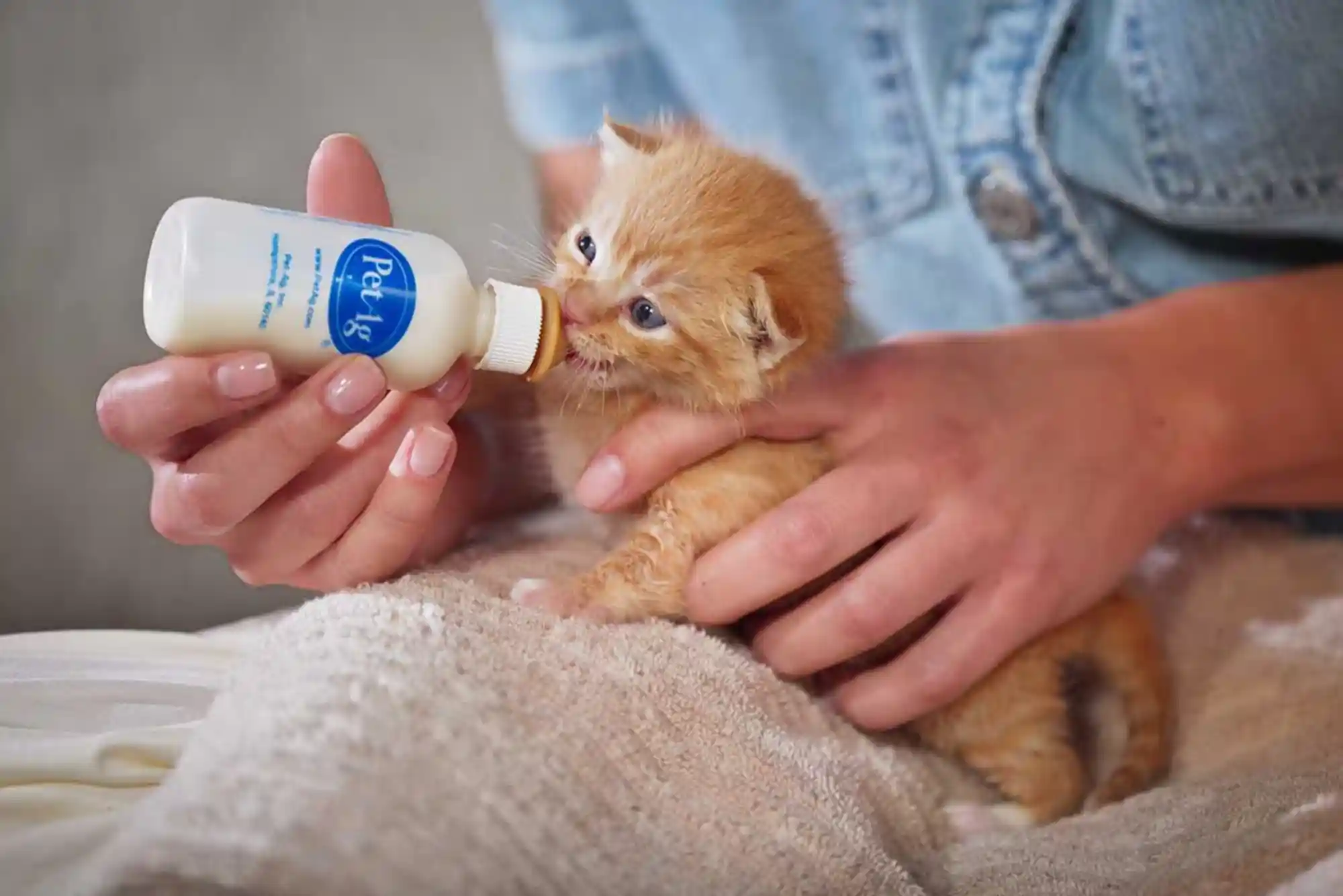
Proper positioning is essential when learning how to bottle-feed orphaned newborn kittens (KMR schedule). Place the kitten belly-down on a soft towel, with its head in a natural, slightly elevated position.
Never feed a kitten on its back like a human baby. This position increases the risk of formula entering the lungs.
Support the kitten gently without squeezing its chest or abdomen. Keep its head aligned with its body throughout feeding.
Use a Suitable Kitten Nursing Bottle
Choose a small bottle with a nipple designed for newborn kittens. The nipple should release formula slowly rather than pouring freely.
Kitten Raising Guide When turned upside down, the nipple should generally allow controlled drops rather than a continuous stream. Follow the bottle manufacturer’s guidance for checking the opening.
Let the kitten latch naturally and suck at its own pace. Never squeeze the bottle to force formula into its mouth.
If milk comes from the nose, stop feeding immediately. Coughing, choking, or difficult breathing may indicate aspiration. Seek urgent veterinary attention, especially if breathing changes or distress develops.
Recognize When the Kitten Has Finished
Healthy kittens usually suck steadily and swallow comfortably. As they become satisfied, their sucking may slow or stop.
Allow the kitten to take breaks when needed. Never force it to finish a predetermined volume if it shows signs of discomfort.
A swollen abdomen, repeated regurgitation, or diarrhea may indicate a feeding problem. Discuss persistent symptoms with a veterinarian before changing formula concentration or feeding amounts.
Why Warmth Matters Before Feeding
Newborn kittens cannot maintain their body temperature effectively. They rely on their mother or a carefully managed environment to remain warm.
A chilled kitten may become lethargic and lose its ability to digest food properly. Therefore, never attempt routine feeding when a kitten is cold or unresponsive.
Warm the kitten gradually using a safe heat source wrapped in a towel. Make sure part of the enclosure remains cooler, allowing the kitten to move away from heat.
Avoid direct contact with heating pads, hot-water bottles, or other intense heat sources. These can cause burns or overheating.
If a kitten feels cold, appears weak, or cannot suck effectively, contact a veterinarian immediately. Do not force-feed a cold or poorly responsive kitten.
Helping Orphaned Kittens Eliminate Waste
Why Newborn Kittens Need Assistance
During their first few weeks, kittens generally cannot urinate and defecate independently. Their mother normally stimulates elimination by licking their genital and anal areas.
Caregivers must reproduce this essential behavior when the mother is absent. This process is commonly called kitten stimulating elimination.
After feeding, gently rub the genital and anal areas with a soft cotton pad or cloth moistened with warm water. Use light, repeated strokes until the kitten urinates or passes stool.
Stop when elimination occurs, and clean the area gently. Avoid vigorous rubbing because newborn skin is delicate and easily irritated.
Most kittens develop independent elimination skills at approximately three to four weeks. However, development varies, so continue assistance until each kitten can eliminate reliably.
Contact a veterinarian if a kitten cannot urinate, repeatedly strains, develops a swollen abdomen, or has persistent diarrhea or constipation.
Monitoring Growth and General Health
Daily monitoring helps caregivers identify problems before they become emergencies. Weigh kittens at approximately the same time each day using a digital scale.
Healthy kittens generally gain weight steadily. A commonly used benchmark is approximately 10–15 grams daily, although growth varies with age, breed, birth weight, and health.
A kitten that repeatedly cries after feeding may be hungry, cold, uncomfortable, or unwell. Crying alone cannot identify the cause, so assess the kitten’s warmth, feeding history, and behavior.
Keep bedding clean and dry. Wash feeding equipment thoroughly and maintain a quiet, comfortable nesting area.
Arrange veterinary care early, especially for kittens whose mother is missing. A veterinarian can assess hydration, body temperature, congenital problems, parasite risks, and nutritional requirements.
Transitioning From Bottle-Feeding to Solid Food
Around three to four weeks of age, kittens often begin showing interest in soft food. This stage marks the beginning of weaning rather than an immediate end to bottle-feeding.
Offer a shallow dish containing wet kitten food mixed with prepared KMR to create a soft gruel. Choose food formulated specifically for growing kittens.
Allow the kitten to explore at its own pace. Some kittens learn quickly, while others need repeated gentle introductions.
Continue bottle-feeding while the kitten learns to eat enough solid food. Gradually reduce formula feeds as solid-food intake increases and weight gain remains consistent.
Most kittens complete weaning at approximately six to eight weeks. However, the transition should depend on their development, appetite, and ability to eat independently.
Common Bottle-Feeding Mistakes to Avoid
One frequent mistake is feeding a kitten while it is cold. This can interfere with digestion and increase the risk of complications.
Another mistake is using cow’s milk or homemade mixtures without veterinary guidance. These may not provide the balanced nutrition required for normal growth.
Caregivers should also avoid forcing formula into the mouth, overfilling the stomach, and preparing formula at incorrect concentrations.
Skipping overnight feeds can be dangerous for very young kittens. Their small energy reserves make them vulnerable to low blood sugar and dehydration.
Finally, never ignore poor weight gain or repeated feeding difficulties. Early veterinary intervention can make a substantial difference in a fragile kitten’s recovery.
Frequently Asked Questions
How Often Should You Bottle-Feed a Newborn Kitten?
Newborn kittens generally need feeding every two to three hours, including overnight. As they grow, intervals can gradually increase according to age, weight, and veterinary advice.
The correct schedule depends on individual nutritional needs. Monitor daily weight gain and follow the KMR manufacturer’s feeding instructions.
Can You Use Regular Milk Instead of KMR?
Regular cow’s milk is not an appropriate substitute for kitten milk replacer. Its nutritional composition does not meet newborn kittens’ specific requirements.
Commercial KMR is designed to provide more suitable nutrition. Ask a veterinarian for guidance if the appropriate formula is temporarily unavailable.
How Do You Know if a Newborn Kitten Is Getting Enough Milk?
Steady weight gain, comfortable feeding, and normal activity between sleep periods are encouraging signs. Record each kitten’s weight daily to identify changes early.
Persistent crying, weakness, poor sucking, or weight loss may indicate inadequate intake or illness. Seek veterinary advice rather than simply increasing feeding volumes.
Should You Wake a Newborn Kitten for Feeding?
Yes, very young orphaned kittens usually need scheduled feeds, even during the night. Their small stomachs and limited energy reserves make regular nutrition essential.
Do not allow a newborn to sleep through repeated scheduled feeds without professional guidance. Weak or underweight kittens may require a more closely supervised feeding plan.
What Should You Do if a Kitten Refuses the Bottle?
First, check the kitten’s temperature, alertness, nipple flow, and formula temperature. Never squeeze formula into its mouth or force it to swallow.
A cold, weak, dehydrated, or sick kitten may refuse food. Contact a veterinarian promptly if the kitten will not feed, particularly during the newborn period.
When Should You Take an Orphaned Kitten to the Veterinarian?
Arrange an early examination for every orphaned newborn kitten. Seek urgent care for breathing difficulties, milk coming from the nose, marked weakness, coldness, repeated vomiting, or inability to feed.
Newborn kittens can deteriorate quickly. Prompt assessment is safer than waiting for symptoms to improve independently.
lookme.ae is an online platform designed to help users discover services, businesses, and useful resources in the UAE. Whether you are searching for local businesses, exploring available services, or looking for convenient solutions, lookme.ae can help simplify your search. Explore the platform to find relevant information, connect with service providers, and discover opportunities that meet your personal or business needs.
Conclusion
Understanding how to bottle-feed orphaned newborn kittens (KMR schedule) helps caregivers provide the consistent nutrition and attention these vulnerable animals need. Safe formula preparation, correct positioning, age-appropriate feeding intervals, and daily weight monitoring all support healthy development.
Warmth and elimination assistance are equally important, particularly during the first weeks of life. As kittens grow, introduce suitable solid food gradually and reduce bottle-feeding according to their progress.
Ready to care for an orphaned kitten? Establish a feeding and weight-tracking routine today, prepare your supplies carefully, and arrange a veterinary examination. With attentive care and professional guidance, you can give a vulnerable kitten a stronger start in life.