
Dubai’s property system is one of the more transparent in the region, but transparent doesn’t mean automatic. Every year, buyers run into problems they could have caught in an afternoon: a seller who wasn’t the sole owner, a mortgage nobody mentioned, or a tenant with two years left on the lease.
Whether you’re buying your first studio or your fifth investment unit, the checks below are what stand between a smooth transfer and a frozen deposit. If you plan to buy a property in Dubai, treat these as non-negotiable.
Confirm Who Actually Owns It
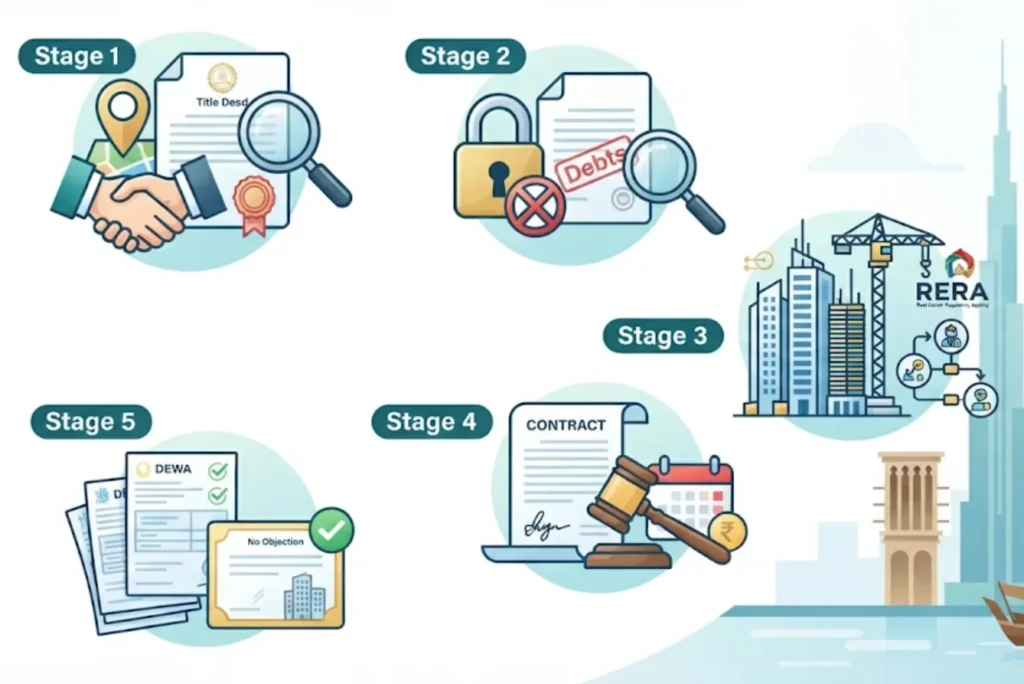
Start with the title deed. You can verify it through the Dubai Land Department’s Dubai REST app or website using the deed number. Check that the name matches the seller’s passport and that the unit number, floor, and area match the listing. If the property is jointly owned, every owner has to sign or be represented by a properly attested power of attorney.
A power of attorney issued abroad needs to be legalized and translated, and it should specifically allow the sale of that unit. A general one often won’t be accepted at transfer.
Check the Developer and the Project if You’re Buying Off-Plan


Off-plan units don’t have a title deed yet. Instead, they’re registered on the Oqood system, and you should see that registration before paying anything beyond the booking amount.
Confirm that the developer and project are registered with RERA and that your payments go into the project’s official escrow account, not a personal or general company account. Escrow is what protects you if construction stalls, so a request to pay elsewhere is a serious warning sign.
Find Out What’s Owed on the Property
A property can carry debts that pass to the buyer if nobody catches them. If the seller has a mortgage, the bank has to issue a liability letter showing the exact payoff amount, and the loan must be cleared at or before transfer.
Unpaid service charges are just as important. The developer won’t issue the No Objection Certificate needed for transfer until those are settled, so ask for the NOC early instead of finding out about a large outstanding balance a week before closing.
Higher Stakes Need Extra Diligence
The bigger the purchase, the more these checks matter. If you’re looking at a villa Palm Jumeirah for sale, also ask the master developer whether past extensions, pool additions, or layout changes were approved.
Unapproved work can delay the NOC or leave you paying for corrections later. It’s also worth thinking about inheritance before you buy. Without a registered will, the default rules may not divide the property the way you’d want, so many foreign owners register a will through the DIFC or the Dubai Courts.
Ask About the Tenant
Selling a property doesn’t end a lease in Dubai. If there’s a tenant with a registered Ejari contract, you inherit that tenancy on the same terms. To move in yourself, you’d usually need to give 12 months’ notice through a notary public or registered mail, and you can only do that on specific grounds.
Ask for the tenancy contract, the Ejari certificate, and the rent payment schedule so you know exactly what you’re taking on.
Use the Official Paperwork
Secondary sales in Dubai use the RERA Form F, the standard memorandum of understanding between buyer and seller. It records the price, deposit, transfer date, and what happens if either side backs out. Make sure your broker has a valid RERA registration and that the listing has a Trakheesi permit. If a deal is worth negotiating, it’s worth putting on the official form.

irfan
Editorial contributor covering UAE business, real estate, lifestyle, and local guides on LookMe.ae.