Introduction
If your sofa, chair legs, curtains, or wooden furniture are becoming your cat’s favourite scratching targets, you are probably wondering how to stop cats from scratching furniture without making your pet stressed or unhappy. The good news is that you do not need to stop scratching altogether. Scratching is a normal and important part of feline behaviour, so the most effective approach is to redirect it toward a suitable scratching post or pad.
Cats scratch to maintain their claws, stretch their bodies, communicate through scent and visual marks, and respond to excitement or stress. This means that simply telling a cat “no” rarely solves the problem. Instead, you need to make the scratching post more appealing than the furniture.
A well-planned scratching post setup can protect your belongings while giving your cat a healthy outlet for natural behaviour. Whether you have a young kitten or an older cat that has developed a strong attachment to your sofa, the right combination of location, texture, stability and positive reinforcement can make a significant difference.
For additional guidance, you can explore these practical Cat Scratching Fixes or visit Lookme for more pet-care information.
Why Do Cats Scratch Furniture?
Before learning how to stop cats from scratching furniture, it helps to understand why furniture becomes attractive in the first place. Scratching is not normally an act of revenge, stubbornness or deliberate destruction. It serves several useful purposes for cats.
Scratching Helps Maintain the Claws
Cats naturally shed the outer layers of their claws. Scratching against a suitable surface helps remove worn claw material and keeps the claws in good condition. This is one reason cats may repeatedly return to a particular scratching surface.
Scratching Provides a Full-Body Stretch
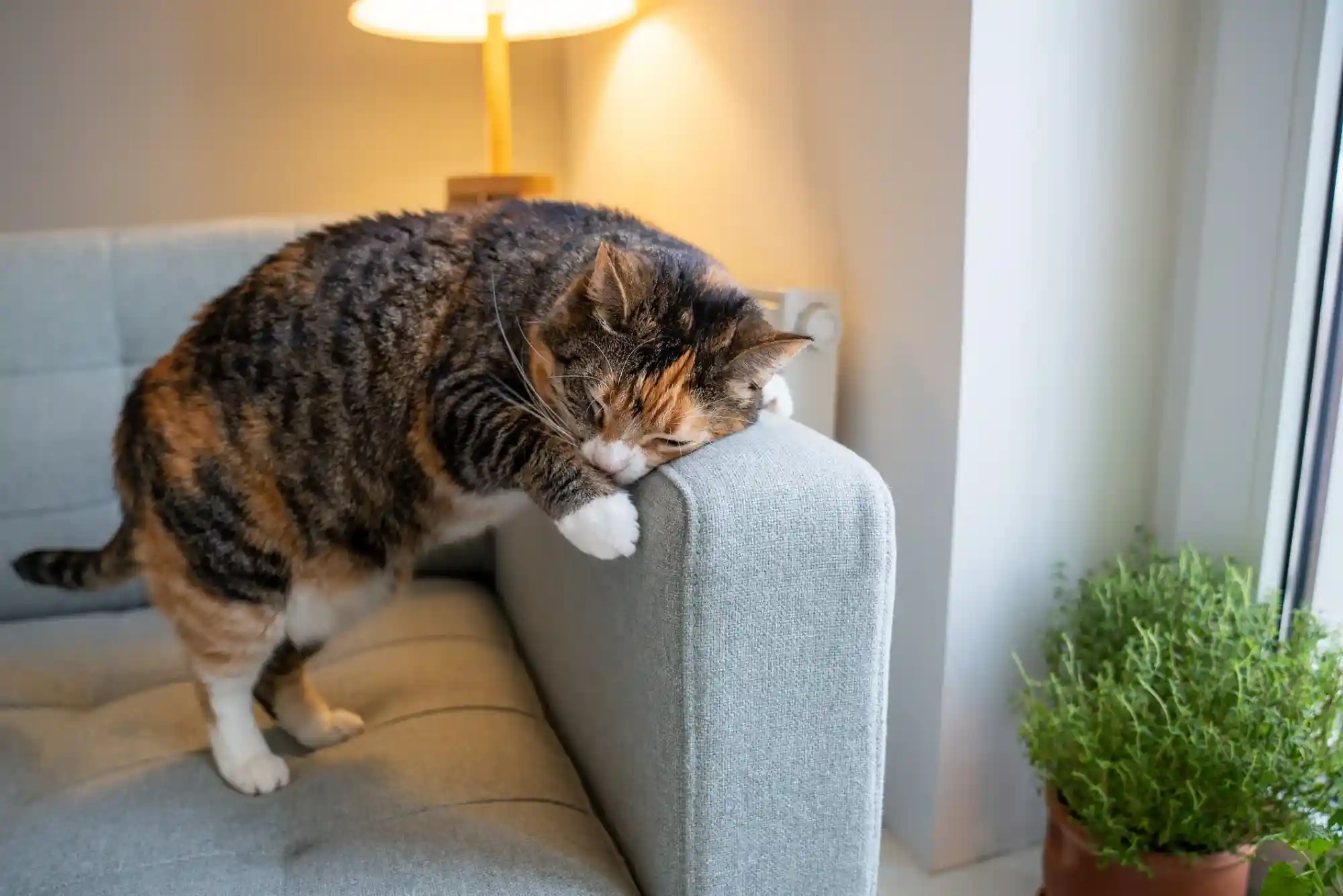
Watch a cat scratch a tall sofa arm and you will notice that scratching is often accompanied by an impressive stretch. A vertical scratching surface allows the cat to extend its shoulders, back and legs.
This is why a short, lightweight scratching pad may fail when a cat prefers to stretch vertically. A suitable post should allow your cat to extend its body comfortably.
Scratching Marks Territory
Scratching also has a communication function. Cats have scent glands around their paw pads, and scratching leaves both visible marks and scent information. Prominent locations such as sofa corners can therefore become particularly attractive.
This explains an important part of how to stop cats from scratching furniture: putting a scratching post in an isolated corner may not work if your cat wants to mark a busy, central area.
How to Choose the Right Scratching Post
The best scratching post is not necessarily the most expensive one. The important thing is whether it matches your cat’s individual scratching preferences.
Choose the Correct Height
For cats that scratch furniture vertically, choose a post tall enough for a full-body stretch. If your cat stands upright against the sofa while scratching, a tall vertical post is generally a better match than a small floor-level scratcher.
A post that is too short can be frustrating because the cat cannot reproduce the movement it enjoys on the furniture.
Make Stability a Priority
Stability is one of the most overlooked parts of scratching post setup. If the post wobbles, slides or falls when your cat puts its weight against it, your cat may quickly decide that it is unreliable.
Cats generally benefit from sturdy scratching surfaces that remain stable during vigorous scratching.
A heavy base is particularly important for larger or energetic cats.
Match the Texture to Your Cat
Cats have individual preferences for scratching materials. Some enjoy sisal, while others prefer cardboard, carpet, wood or other textured surfaces. ASPCA guidance recommends offering different textures and orientations while you discover what your individual cat prefers.
If your cat repeatedly scratches a woven sofa, for example, a smooth plastic scratching surface may not be appealing. Look at what your cat already chooses and use that information when selecting a replacement.
Where Should You Put a Scratching Post?
Location can be just as important as the scratching post itself. One of the biggest mistakes owners make is putting the scratcher somewhere hidden because they want to keep it out of the way.
Unfortunately, your cat may have no interest in using it there.
Place the Post Beside the Furniture
If your cat scratches one particular corner of the sofa, place the scratching post directly beside that corner. Veterinary guidance also recommends positioning the alternative close to the existing scratching target.
At first, the goal is not to make the post look attractive in your living room. The goal is to make it extremely convenient for your cat.
Once your cat consistently uses the post, you can gradually move it to a more convenient location if necessary.
Use High-Traffic Areas
Cats often scratch in areas where they spend time. A central room, doorway, sleeping area or favourite resting location may be more effective than a quiet spare room.
Many cats also like to scratch after waking up, making the area near a favourite sleeping spot particularly useful.
Provide More Than One Scratching Option
If you have several rooms where your cat scratches, one post may not be enough. Multiple cats may also have different preferences or may avoid sharing a particular resource.
Instead of expecting one scratching post to solve every problem, think about creating several appropriate scratching opportunities throughout the home.
How to Introduce Your Cat to a Scratching Post
Buying a scratching post does not automatically teach your cat to use it. You need to make the new surface interesting without forcing your cat to interact with it.
Let Your Cat Discover It Naturally
Place the scratching post near the furniture your cat already targets. Allow your cat to investigate it, sniff it and walk around it.
You can make the area more interesting with a favourite toy or, when appropriate for your cat, a small amount of catnip. ASPCA recommends using catnip and toys as ways to encourage cats to investigate scratching posts.
Reward the Behaviour You Want
Whenever your cat uses the scratching post, offer praise, attention or a small food reward if your cat responds well to treats.
Positive reinforcement helps your cat build an association between the scratching post and pleasant experiences. Over time, the behaviour can become habitual.
Do not grab your cat’s paws and physically drag its claws across the post. Forcing a cat to scratch can create fear or make the new object unpleasant. Veterinary guidance recommends allowing cats to approach and use scratching surfaces voluntarily.
How to Stop Cats from Scratching Furniture Without Punishment
When people search for how to stop cats from scratching furniture, they sometimes consider spraying water, shouting or physically removing the cat. These methods can create additional problems.
Punishment may teach a cat to avoid scratching when you are nearby, but it does not necessarily teach the cat what it should scratch instead. It can also increase fear and stress. Animal welfare guidance recommends redirection and reward-based approaches rather than harsh corrections.
Instead, make the furniture temporarily less appealing while making the scratching post more rewarding.
You can protect vulnerable furniture with suitable covers or pet-safe barriers while your cat learns the new habit. Double-sided sticky tape and other temporary physical deterrents are commonly recommended because they change the texture of the furniture without hurting the cat.
The key is to use deterrents alongside a suitable scratching alternative. If you simply make every scratching location unpleasant, you have not addressed your cat’s natural need to scratch.
What If Your Cat Still Ignores the Scratching Post?
If your cat refuses to use a scratching post, do not immediately assume that the cat is being difficult. The setup may simply be wrong.
Try changing the orientation. A cat that scratches carpet may prefer a horizontal scratching pad, while a cat that attacks the side of a sofa may prefer a vertical post. Cats can also develop strong preferences for particular textures.
Pay attention to where, when and how your cat scratches. If your cat stretches upward before scratching, provide a taller surface. If it crouches and scratches the carpet, try a horizontal board.
This observation-based approach is one of the most reliable ways to understand how to stop cats from scratching furniture, because you are working with the cat’s natural behaviour rather than fighting against it.
Can Stress Cause Excessive Scratching?
Sometimes increased scratching is connected with environmental changes or stress. Moving house, introducing another pet, changes in routine, unfamiliar visitors and other disruptions can affect feline behaviour.
Because scratching can be part of territorial communication, an anxious cat may use it more frequently in certain areas. Veterinary sources note that anxiety and environmental stress can contribute to increased scratching.
If you suspect stress is contributing to the behaviour, focus on providing predictable routines, safe resting spaces, play opportunities and appropriate environmental enrichment.
Some owners also consider calming pheromone products. For information about feline behaviour and Pheromone Therapy for Cats, consult reliable veterinary or animal-welfare resources and speak with your veterinarian if your cat’s behaviour changes significantly.
A sudden and dramatic change in scratching behaviour should not automatically be treated as a training issue. If excessive scratching appears alongside other unusual behaviour, appetite changes, hiding or signs of distress, professional veterinary advice is appropriate.
How Long Does It Take to Stop Furniture Scratching?
There is no universal timeline. Some cats begin using a new scratcher quickly when it is placed directly beside their favourite furniture target. Others need several weeks of consistent redirection.
The important thing is consistency.
Keep the scratching post accessible, reward appropriate scratching and protect the furniture during the learning period. Avoid moving the post too quickly after your cat begins using it.
Remember that success does not mean your cat stops scratching. A successful outcome means your cat chooses appropriate scratching surfaces instead of your furniture.
Should You Trim Your Cat’s Claws?
Regular claw maintenance can reduce the amount of damage caused by scratching, but it does not remove the underlying need to scratch.
Your cat still needs an appropriate scratching outlet for stretching, claw maintenance and normal behaviour. Nail trimming can therefore be viewed as a supporting measure rather than the main solution.
If you are unfamiliar with trimming claws, ask your veterinarian or a qualified pet professional to demonstrate the correct technique. Avoid cutting into the quick, as this can cause pain and bleeding.
Common Mistakes When Setting Up a Scratching Post
One common mistake is choosing a post based entirely on appearance. A beautiful scratcher that wobbles or is too short may be ignored.
Another mistake is putting the post far away from the furniture being damaged. Your cat has already chosen a location that feels useful, so expecting it to walk across the house to use an alternative is often unrealistic.
A third mistake is giving up after one unsuccessful product. Cats have individual preferences, and a cat that ignores sisal might happily use cardboard or another texture.
Finally, avoid physically forcing your cat to use the post. Let curiosity, rewards and convenient placement do the training.
When Should You Speak to a Veterinarian?
Most furniture scratching is normal feline behaviour, but unusually intense or sudden changes deserve attention.
If your cat suddenly begins scratching much more than usual, appears anxious, becomes aggressive, hides frequently or shows other behavioural changes, speak with your veterinarian. Stress can influence scratching, but behavioural changes can also have medical or environmental causes.
A veterinarian can help determine whether the problem is primarily environmental, behavioural or potentially related to another issue.
FAQs
How do I get my cat to stop scratching my furniture?
The most effective approach is to redirect the behaviour rather than eliminate scratching. Place a sturdy scratching post directly beside the furniture your cat targets, match the post to your cat’s preferred orientation and texture, protect the furniture temporarily and reward your cat whenever it uses the appropriate scratching surface.
Why is my cat scratching the furniture all of a sudden?
A sudden increase in scratching may be associated with changes in the environment, stress, boredom, territorial behaviour or an unsuitable scratching setup. Consider whether there have been recent changes at home and check whether your cat has an accessible, stable scratching surface.
What type of scratching post do cats like best?
There is no single best scratching post for every cat. Many cats enjoy sturdy vertical posts covered in sisal, while others prefer horizontal cardboard or carpeted surfaces. The best choice is the one that matches your cat’s existing scratching habits.
Where should I put a cat scratching post?
Start by placing it directly beside the furniture or area your cat already scratches. You can also place scratchers near favourite sleeping areas or in busy parts of the home where your cat naturally spends time.
Does catnip make cats use scratching posts?
Catnip can encourage some cats to investigate a scratching post, but not every cat responds to it. Toys, treats, praise and strategic placement can also make the scratcher more appealing.
Should I punish my cat for scratching the sofa?
No. Punishment can create fear and does not teach the cat which surface it should use instead. Positive reinforcement and redirection are generally better approaches for changing scratching habits.
Conclusion: Make the Scratching Post Better Than the Sofa
Learning how to stop cats from scratching furniture is really about understanding what your cat needs. Scratching is healthy, instinctive behaviour, so the goal should be to redirect it rather than suppress it.
Start with a stable scratching post that is tall or wide enough for your cat’s preferred movement. Place it close to the furniture being damaged, experiment with textures and orientations, and reward your cat for using it. Protect the furniture temporarily while the new habit develops, and avoid punishment or forcing your cat’s paws onto the scratcher.
With patience and the right setup, your cat can continue enjoying a natural behaviour while your sofa and other furniture receive much better protection.